
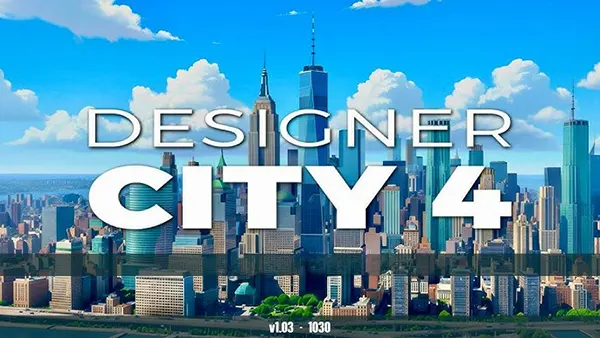
Designer City 4: Review of the Mobile City-Building Simulator
Designer City 4 is a mobile city-building simulator developed for players who enjoy planning urban environments, managing infrastructure and creating large-scale virtual cities without the pressure of competitive gameplay. Released as part of the long-running Designer City series, the game continues the formula that made its predecessors popular while introducing expanded construction options, improved visuals and greater control over city development. Available on Android and iOS devices, it offers a flexible experience that allows players to build at their own pace.
What Is Designer City 4 and How Does It Work?
Designer City 4 places players in the role of a city planner responsible for transforming empty land into a thriving urban area. The gameplay revolves around constructing residential districts, commercial buildings, industrial zones and public services while maintaining a balanced economy. Unlike many strategy games that focus heavily on timers or competitive mechanics, Designer City 4 encourages creativity and long-term planning.
The game uses an intuitive touch-based interface that makes it easy to place roads, buildings and decorations. Players can gradually unlock new structures as their population grows and tax income increases. Expansion opportunities become available over time, allowing cities to develop far beyond their initial boundaries.
One of the key strengths of the game is its accessibility. New players can quickly understand the basic mechanics, while experienced city-building fans can experiment with more advanced layouts, transport networks and zoning strategies. This balance helps Designer City 4 appeal to a wide audience.
Core Gameplay Systems and Progression
Population growth serves as the foundation of progression. Residents move into available housing, generate tax revenue and increase demand for services. Meeting these needs becomes increasingly important as the city expands and more complex infrastructure is required.
Economic management plays a significant role throughout the experience. Players must monitor income and expenditure, decide when to invest in new developments and ensure that essential services remain adequately funded. Poor planning can slow growth, while efficient management creates opportunities for rapid expansion.
The game also incorporates achievement systems and unlockable content. Reaching population milestones, completing objectives and maintaining a successful city allows players to access additional buildings and decorative elements, creating a sense of continuous development without forcing aggressive monetisation.
Visual Design, Buildings and Customisation Options
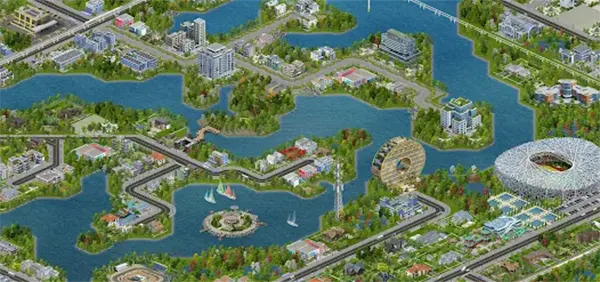
Designer City 4 places considerable emphasis on visual variety. The game includes a large collection of residential, commercial and public buildings inspired by modern urban architecture. Skyscrapers, parks, government facilities and entertainment venues can be combined to create cities with distinct identities.
The graphics are designed to perform well on mobile devices while still presenting detailed environments. Buildings feature recognisable architectural styles, and city districts become increasingly impressive as populations rise. Day-to-day city activity contributes to the feeling that the urban environment is alive and evolving.
Customisation extends beyond simple building placement. Players can redesign neighbourhoods, adjust road layouts and incorporate decorative features such as trees, monuments, waterfront areas and public squares. This flexibility allows each city to develop a unique appearance.
How Creative Freedom Shapes the Experience
Unlike some city-building games that require strict adherence to predefined layouts, Designer City 4 gives players significant control over urban planning. Roads can be organised according to personal preferences, and districts can be developed with different priorities in mind.
This freedom encourages experimentation. Some players may focus on creating highly efficient metropolitan centres, while others may prioritise aesthetics and build visually attractive districts filled with parks, landmarks and waterfront developments. The game supports both approaches effectively.
Creative flexibility also contributes to replay value. Since there is no single correct way to design a successful city, players can start new projects using entirely different planning philosophies and continue discovering new building combinations and city layouts.
Strengths, Limitations and Overall Value in 2026
One of the most notable advantages of Designer City 4 is its relaxed approach to city management. The game avoids excessive complexity while still offering enough depth to keep players engaged over extended periods. This makes it suitable for both short sessions and long-term city development.
The extensive building catalogue provides substantial content for players interested in urban design. Regular updates throughout the series have expanded available construction options, helping cities feel more diverse and personalised than in earlier entries.
Another positive aspect is the ability to progress without feeling forced into competitive multiplayer systems. Players can concentrate entirely on building and managing their own cities, which remains one of the defining characteristics of the Designer City franchise.
Is Designer City 4 Worth Playing?
For fans of city-building simulators on mobile devices, Designer City 4 offers a well-rounded experience that combines accessibility, creative freedom and meaningful progression. The game successfully delivers the satisfaction of watching a small settlement develop into a large urban centre.
Players looking for highly realistic economic simulation may find certain mechanics simplified compared with PC-based city builders. However, these simplifications help maintain a smooth experience on smartphones and tablets without overwhelming casual users.
As of 2026, Designer City 4 remains a strong choice for anyone interested in mobile urban planning games. Its combination of city management, customisation options and long-term progression creates an engaging experience that can remain enjoyable for months of play.
RECOMMENDED GAMES
-
 Azur Promilia Review: A Fantasy RPG Built for Mobile Players
Azur Promilia is one of the most discussed mobile RPG …
-
 Kingdom Rush 5: Alliance – Wukong’s Journey: The Return of a Legend...
The Kingdom Rush franchise has long been regarded as one …
-
 Destiny: Rising — A Mobile Sci-Fi RPG Shooter
“Destiny: Rising” has emerged in 2025 as one of the …
-
 “Tarisland” — Attempting to Bring WoW to Mobile: Success or Failure?
In 2025, the mobile gaming market has witnessed another ambitious …