
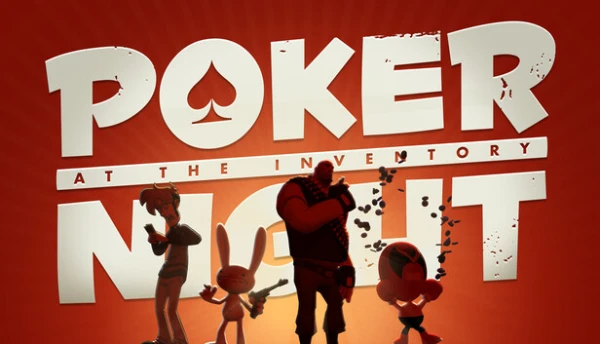
Poker Night at the Inventory: Texas Hold’em and Virtual Opponents in the 2026 Remaster
Poker Night at the Inventory returned in March 2026, bringing the original 2010 poker game back with updated graphics, revised card mechanics and improved computer-controlled opponents. Developed by Skunkape Games, the remaster combines No Limit Texas Hold’em with conversations between recognisable video game and comic book characters. Its gameplay shares several features with conventional casino poker, although virtual currency and fictional opponents create a different experience.
Texas Hold’em in Poker Night and Online Casinos
The remaster follows the traditional rules of Texas Hold’em, which also form the basis of numerous casino poker games. Each participant receives two private cards and uses five community cards to form the strongest possible five-card combination. The familiar sequence of pre-flop betting, flop, turn and river remains unchanged, as does the standard ranking of poker hands, from a high card to a royal flush.
The poker experience in Poker Night at the Inventory has much in common with traditional casino card games. Texas Hold’em played at an online casino follows the same fundamental rules, requiring participants to evaluate their hands and respond to their opponents’ decisions. However, the remaster removes the financial element of casino poker, concentrating instead on fictional competition and character interactions.
Another important distinction concerns the opponents. Depending on the poker format, casino customers may compete against other participants or play against a dealer under specific rules. Poker Night at the Inventory instead recreates a five-player poker tournament featuring four fictional characters. Increasing blinds and the elimination of participants who lose their chips determine the tournament’s progression until a single winner remains.
Similarities and Differences in Poker Mechanics
The No Limit format is another connection between the remaster and conventional tournament poker. Participants can commit their entire remaining chip stack during a betting round, creating an all-in situation. However, the consequences are fundamentally different. Losing a tournament in Poker Night affects only progress within the video game, whereas losing a real-money poker tournament in a casino may involve forfeiting the entry fee.
Casino poker encompasses several distinct formats, including traditional multiplayer Texas Hold’em, Casino Hold’em and Caribbean Stud Poker. These games differ in their betting structures, winning conditions and the role of the dealer. Poker Night concentrates specifically on tournament-style Texas Hold’em, making its rules comparable to multiplayer poker rather than casino variations in which participants compete directly against the house.
Both environments involve uncertainty because participants cannot normally see their opponents’ private cards. Nevertheless, familiarity with the video game’s computer-controlled characters does not automatically translate into an advantage at a casino poker table. Human opponents behave differently, and casino poker introduces financial considerations that are entirely absent from the fictional tournaments presented in the remaster.
Virtual Opponents and Their Behaviour in the 2026 Remaster
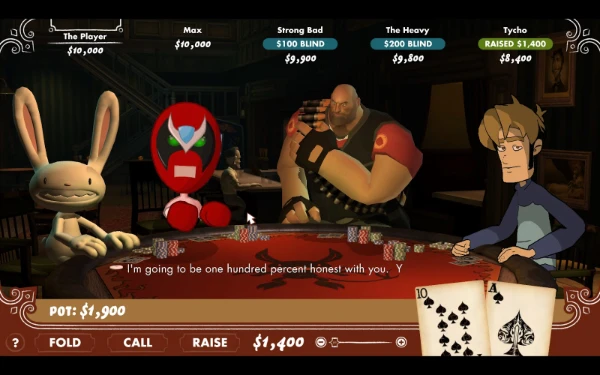
The tournament features Max from Sam & Max, Strong Bad from Homestar Runner, Tycho from Penny Arcade and the Heavy from Team Fortress 2. Each character contributes a distinctive personality through conversations, gestures and reactions to events at the table. Unlike conventional casino poker, where social interaction depends on actual participants, the dialogue in Poker Night forms an integral part of its scripted entertainment.
Skunkape Games revised the original poker programming to improve the decisions made by computer-controlled opponents. Their behaviour reflects both individual playing styles and the circumstances of each hand. The updated system makes the competition more convincing without removing the exaggerated personalities that distinguished the original release. Difficulty settings also influence the standard of competition and the opponents’ behaviour.
Max frequently contributes unpredictable humour, Strong Bad displays exaggerated confidence, Tycho brings an analytical personality, and the Heavy maintains a more direct manner. These differences give individual tournaments their own atmosphere. However, character dialogue should not be interpreted as a guaranteed indication of card strength, since many conversations are included primarily for comedy rather than as meaningful poker signals.
Reading Poker Tells and Understanding Opponent Decisions
Facial expressions, gestures and changes in behaviour are commonly associated with poker tells. In a physical casino, these signals may reflect a human participant’s reaction to their cards or the actions of others. Poker Night reproduces similar elements through character animations and recorded dialogue, although these reactions operate within the limitations of programmed behaviour and cannot reproduce the full complexity of human decisions.
The remaster retains an important principle of conventional poker: opponents cannot see another participant’s private cards. According to the developer, cards are dealt randomly, while computer-controlled decisions depend on the information available to each character. Higher difficulty therefore changes the standard of virtual competition rather than guaranteeing stronger cards for the opponents or predetermined tournament outcomes.
Unlike casino poker, where financial stakes may influence behaviour, Poker Night rewards tournament progress with cosmetic items, alternative table designs and themed card decks. Its appeal comes from the combination of recognisable Texas Hold’em mechanics, character interactions and collectible rewards. The 2026 remaster preserves these distinctions, presenting poker as a standalone entertainment experience rather than a real-money gambling activity.
RECOMMENDED GAMES
-
Poker Night at the Inventory: Texas Hold’em and Virtual Opponents i...
Poker Night at the Inventory returned in March 2026, bringing …
-
 Best Casino Simulators for PC: Vegas Style Games Without Real Stakes
Casino simulators for PC offer a way to enjoy the …
-
 Azur Promilia Review: A Fantasy RPG Built for Mobile Players
Azur Promilia is one of the most discussed mobile RPG …
-
 Kingdom Rush 5: Alliance – Wukong’s Journey: The Return of a Legend...
The Kingdom Rush franchise has long been regarded as one …