
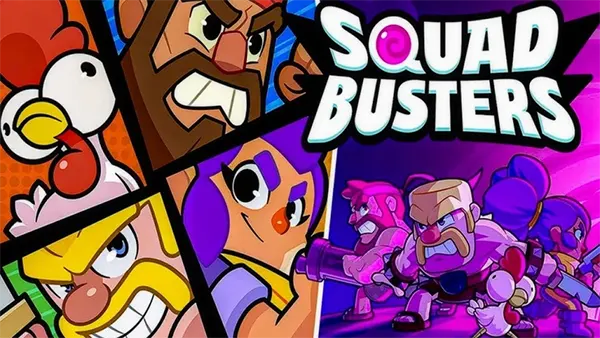
Squad Busters: How to Build a Stable Squad and Which Combinations Work
Squad Busters, released globally by Supercell in 2024 and actively updated through 2025–2026, combines mechanics from several well-known franchises such as Clash of Clans, Brawl Stars and Boom Beach. Instead of controlling a single character, players assemble a growing squad during the match, opening chests and merging units into stronger versions. Because matches are short and chaotic, the composition of the squad becomes the key factor that determines whether a player finishes with a strong position or loses valuable gems. Understanding how different characters interact, when to merge them and how to maintain a balanced squad is essential for consistent results.
Understanding the Role System in Squad Busters
Each character in Squad Busters belongs to a functional role, even though the game does not explicitly label them as such. In practice, most squads are built around three categories: damage dealers, resource generators and support units. Damage dealers such as Colt, Barbarian or Shelly provide the core combat strength needed to win fights and control the map.
Resource generators are equally important because they accelerate squad growth. Characters like Goblin or Trader allow players to collect coins and gems faster, which means more chests and faster upgrades during a match. Without a steady income of resources, even a powerful squad can fall behind players who scale more efficiently.
Support units complete the composition by improving survivability or utility. Characters such as Medic or Pam can keep the squad alive during prolonged fights. The balance between these roles often determines whether a squad remains competitive throughout the match rather than only dominating the early phase.
Why Balanced Squads Perform Better
Many beginners attempt to stack only damage units, assuming that more attack power guarantees victory. In practice, this approach often fails in longer matches where resource control and survivability become more important than raw damage.
A balanced squad ensures steady progression. Resource units secure coins for additional chests, support units maintain health during engagements and damage dealers finish fights efficiently. This combination allows players to maintain pressure while avoiding unnecessary losses.
Experienced players usually maintain a ratio close to two damage units, one resource unit and one support unit in the early game. As the match progresses and more merges occur, the squad gradually shifts toward stronger combat characters while keeping at least one economic unit active.
Strong Character Combinations in the Current Meta
Several combinations consistently perform well in the 2026 meta because they combine economic growth with reliable combat strength. One of the most effective early-game setups includes Goblin, Barbarian and Colt. Goblin accelerates coin generation while the other two characters provide strong damage output.
Another widely used combination revolves around Trader and Tank-style units. Trader increases gem income, which directly affects the final ranking in many match types. Pairing Trader with durable fighters such as El Primo or Heavy allows the squad to collect gems while surviving aggressive encounters.
Support-oriented combinations are also common in longer matches. A squad containing Pam or Medic together with mid-range damage units can outlast opponents in repeated engagements. Healing becomes particularly valuable when several squads collide near the centre of the map.
Early Game vs Late Game Synergy
Successful squads evolve during a match. Early game priority is fast expansion, which means choosing characters that provide coins or quick damage. Goblin, Chicken and Barbarian are often prioritised in the first few chests for this reason.
During the mid game, merging becomes the main objective. Two-star or three-star units dramatically increase combat strength, and players usually replace weaker economic characters with stronger fighters if enough coins have already been collected.
Late game fights are usually determined by durability and burst damage. Squads built around merged heavy units, supported by healing or area damage, tend to perform best when several players compete for the final gem positions.
Practical Strategies for Building a Stable Squad
Consistency in Squad Busters is less about luck and more about decision-making. Players who carefully choose which chests to open and when to merge units usually achieve more stable results than those who simply collect random characters during the match.
One practical rule is to avoid over-expanding the squad too quickly. Opening many chests early without merging units often results in a large but weak group that loses fights against smaller squads with upgraded characters.
Another key strategy is positioning. Moving through the map while clearing monsters allows squads to gather coins without unnecessary fights. This approach gives time to upgrade characters before engaging other players.
Common Mistakes That Break Squad Synergy
A frequent mistake is ignoring resource characters after the early game. While damage units become stronger later, removing every economic unit too soon often leads to slower progression compared with opponents who continue generating coins.
Another issue is poor merging decisions. Players sometimes merge characters immediately even when doing so reduces squad size at a critical moment. Maintaining enough units on the field is important during active combat situations.
Finally, many players chase fights instead of controlling the map. Squad Busters rewards efficient farming and smart engagements. Stable squads focus on growth first and choose battles only when the advantage is clear.
RECOMMENDED GAMES
-
 Kingdom Rush 5: Alliance – Wukong’s Journey: The Return of a Legend...
The Kingdom Rush franchise has long been regarded as one …
-
 Destiny: Rising — A Mobile Sci-Fi RPG Shooter
“Destiny: Rising” has emerged in 2025 as one of the …
-
 “Tarisland” — Attempting to Bring WoW to Mobile: Success or Failure?
In 2025, the mobile gaming market has witnessed another ambitious …
-
 Palworld Mobile: Pokémon With Guns Soon on Smartphones
The gaming world was caught off guard by the unexpected …