
Star Wars Zero Company: How Squad Tactics, Operative Synergy and Battlefield Decisions Work
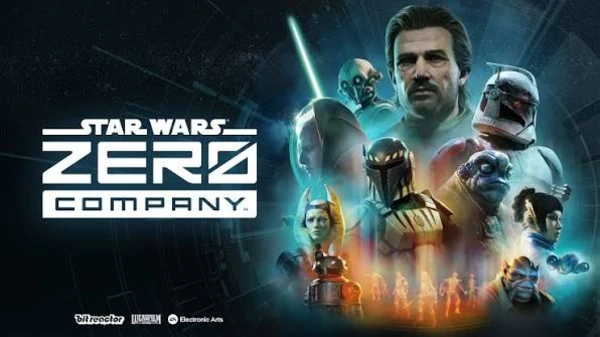
Star Wars Zero Company brings turn-based squad tactics into the final period of the Clone Wars, putting the player in command of a small independent unit rather than a conventional Republic army. Developed by Bit Reactor in collaboration with Electronic Arts and Lucasfilm Games, the game is scheduled for release on 27 August 2026 for PC, PlayStation 5 and Xbox Series X|S. The story follows Hawks, a former Republic officer who leads Zero Company against the Infinite Coil, a Separatist-aligned paramilitary organisation spreading a dangerous threat across the galaxy. Combat is built around deliberate movement, complementary squad roles and choices that carry consequences beyond a single firefight. Individual characters can be powerful, but the central idea is that a well-organised team should achieve more than four operatives acting independently. Bonds between squadmates, shared combat resources, different mission objectives and decisions made away from the battlefield all feed into that approach, making squad composition and timing as important as simply choosing the strongest attack available.
How Squad Tactics Shape Every Mission
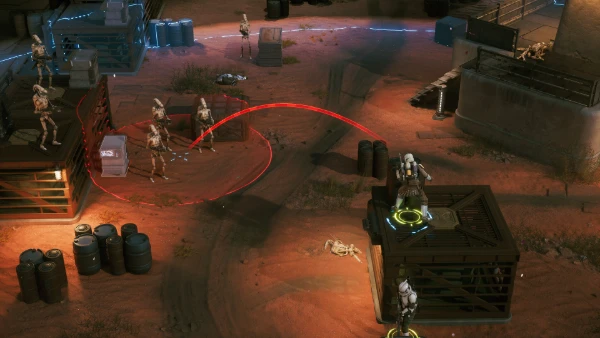
The basic rhythm of Star Wars Zero Company is easy to understand even without extensive experience of tactical games. Operatives move around structured battlefields, use cover, attack enemies and activate abilities during their turns. Movement distance and different actions consume Action Points, so a character cannot simply run across the map, fire repeatedly and then retreat without consequence. A turn therefore becomes a small planning exercise: move into a safer position, attack from the current location, support another operative or prepare for what an enemy is likely to do next. The system gives the player enough information to make informed choices rather than relying entirely on guesswork. Zero Company does not use traditional Fog of War during tactical encounters, meaning enemy locations are visible and the challenge comes from deciding how to deal with known threats.
Squad composition matters because different operatives are built to solve different battlefield problems. The standard Specializations confirmed by EA include Assault, Gunslinger, Heavy, Medic, Scoundrel, Scout, Sharpshooter and Soldier, while certain characters bring more unusual abilities associated with their Star Wars backgrounds. A long-range specialist can pressure an exposed target from safety, whereas a heavily armed operative may be more valuable when cover has to be destroyed or several enemies are concentrated in one area. A Medic gives the group another way to manage prolonged encounters, while characters with mobility or control abilities can change where a fight actually takes place. The useful question before a mission is therefore not simply which character deals the most damage, but whether the selected group can handle distance, pressure, recovery, movement and the objective itself.
Mission objectives are important because Zero Company is not designed around eliminating every opponent in exactly the same way. Confirmed mission types include combat, sabotage, rescue and retrieval, alongside narrative operations focused on particular characters. A defensive approach may work when the squad needs to hold an area, but the same formation can become a liability if explosives must be planted and the team then has to reach an extraction point. Rescue missions can force the group to close distance quickly, while retrieval objectives may reward a route that avoids unnecessary fighting. This gives squad tactics a practical purpose: the best arrangement is the one that serves the current mission rather than a fixed formation copied from one battle to another.
Positioning, Overwatch and Control of the Battlefield
Positioning is especially important because the game gives the player several ways to influence enemy movement. Cover affects attacks, range changes the value of certain weapons, and Overwatch allows an operative to watch a selected area during the enemy turn. Unlike an unrestricted reaction system that covers every direction, Zero Company uses an adjustable Overwatch cone. An enemy entering or acting inside that area can trigger a shot, so its orientation matters. A narrow route, doorway or exposed approach can therefore become dangerous without requiring the operative to fire immediately. At the same time, committing a character to Overwatch ends that operative’s active turn, so it is a deliberate exchange between acting now and threatening an enemy later.
The lack of Fog of War changes how this works in practice. Because opponents are visible, the player can consider where they are likely to move and which part of the battlefield actually needs to be controlled. This reduces the incentive to move forward one cautious step at a time simply because an unseen group might suddenly appear. Instead, a squad can respond to the objective and the visible enemy layout. One operative might hold a firing lane while another advances towards a terminal, hostage or extraction zone. If an opponent is already in a poor position, spending another turn waiting may achieve less than using mobility or a specialised ability to press the advantage immediately.
Good positioning also means thinking about the next action rather than only the current one. Putting every operative behind the nearest piece of cover can protect the squad temporarily but leave nobody able to pressure an important target. Spreading too widely can create the opposite problem, with individual squadmates unable to support each other when enemies concentrate their attacks. The more reliable approach is to create overlapping roles: one character has a clear shot, another protects an approach, and a third can move or disable an enemy that threatens the formation. This is where Zero Company begins to feel less like a sequence of isolated attacks and more like coordinated squad command, without requiring the player to memorise an excessive number of rules.
Why Operative Synergy Matters More Than Individual Power
One of Zero Company’s defining systems is the Bond mechanic. Operatives who repeatedly face dangerous situations together can develop stronger relationships, and those Bonds have a direct gameplay purpose rather than existing only in dialogue. EA has confirmed that closer squadmates can gain new support abilities and cross-training benefits, allowing bonded characters to share certain skills and attributes. This means two operatives who initially fill separate roles can gradually become a more effective partnership. The system also gives squad selection a long-term dimension: bringing the same people together can strengthen their cooperation, while constantly changing the line-up may produce a broader but less established network of relationships.
The authored members of Zero Company illustrate why contrasting abilities can be valuable. Trick, CT-3301, is a veteran clone trooper who served with Hawks before joining the independent unit. Tel-Rea Vokoss is a Tognath Jedi Padawan whose abilities give the team a very different way to influence close-range encounters. Cly Kullervo is a Mandalorian gunslinger from Clan Verminoth, while Luco Bronc is presented as a sharpshooter with his own history connected to the Republic’s actions on Umbara. Players are not limited to these established characters, because Zero Company can also include custom Operators. Hawks can likewise be personalised in appearance, species and combat Specialization, allowing the player to shape both the commander and the wider team around a preferred style.
This mix of authored and custom characters prevents squad building from becoming a simple exercise in collecting predefined heroes. A squad can be organised around durable front-line pressure, ranged fire, support, mobility or a combination of several functions. The important part is how those functions interact. A specialist who can force an enemy away from safety becomes more useful when another squadmate is ready to exploit the exposed target. A powerful ranged character gains value when someone else can keep close-range enemies under control. A support operative becomes more important during missions where the squad cannot simply withdraw after taking damage. Strong characters still matter, but Zero Company’s systems encourage the player to judge them as parts of a working unit.
How Combat Synergies Turn Separate Actions into a Plan
The clearest examples of synergy come from actions that create opportunities for somebody else. Developer demonstrations and official Q&A material have highlighted combinations such as removing enemy cover with explosives, moving opponents into dangerous positions, coordinating several bonded operatives against the same target and using droids for utility as well as direct combat. A Jedi ability that changes an enemy’s position is valuable on its own, but it becomes more useful if that movement exposes the target to a waiting shooter. Destroying cover does not have to finish an opponent either; its purpose may be to give the next operative a cleaner attack. The player is therefore encouraged to think in short chains of actions rather than judge every ability only by its immediate damage.
The shared Advantage system reinforces this idea. Successful damage builds Advantage for the whole squad, and powerful special abilities can consume that common resource rather than the normal Action Points used for routine actions. Because the resource belongs to the team, spending it is a squad-level decision. Using a strong explosive attack may solve an immediate problem, but the same Advantage could potentially support a healing or regeneration ability when several operatives are injured. Saving everything for later can be equally wasteful if an aggressive move now would remove a dangerous enemy before it gets another turn. The mechanic is understandable at a glance: ordinary successful actions create momentum, and the player decides where that momentum is most valuable.
This is also why a balanced squad does not necessarily mean taking one obvious representative of every role. Two characters can overlap in one area and still work well if their secondary abilities solve different problems. Conversely, four impressive specialists can form a weak group when everyone needs the same conditions to succeed. Before committing to a line-up, it makes sense to consider who creates opportunities, who capitalises on them and who can keep the plan functioning when something goes wrong. Bonds and cross-training can change those relationships as the campaign progresses, so a combination that feels limited early on may gain useful options after the same operatives have survived several missions together.
How Decisions Change the Campaign Beyond Combat
Zero Company’s tactical battles sit inside a wider campaign where Hawks also has to manage information, personnel and priorities. Between missions, the group returns to its base of operations, known as the Den. This is more than a visual headquarters. The base supports recruitment, equipment, recovery and interaction with the team, while a network of informants helps Zero Company gather intelligence about threats across the Clone Wars. The strategic layer gives context to battlefield decisions because the squad does not simply move from one unrelated encounter to another. What happens between deployments affects the choices available when the next tactical operation begins.
The Galaxy Map extends this structure across more than 150 planets where strategic Operations can potentially occur during a campaign. That figure does not mean the game contains more than 150 fully modelled tactical environments. EA has clarified that many Operations take the form of strategic decisions and narrative situations, while tactical missions take place across more than a dozen distinct planets with detailed environments. This distinction is useful because it explains the intended scale without exaggerating it. The player can respond to events across a broad section of the galaxy while the major turn-based encounters remain concentrated in locations designed specifically for tactical play.
Operations can provide rewards, information or access to further opportunities, and some present dilemmas with more than one response. Those choices can affect Bonds, side missions and particular story moments. The overall main story remains largely linear rather than splitting into completely separate endings, but the route through it can still differ depending on the squad, missions and decisions selected. This keeps the consequences focused on the people and resources under Hawks’ command instead of promising an entirely different galaxy after every dialogue choice. The result is a campaign where decisions matter most because they alter what the player has to work with and how individual situations develop.
Risk, Loss and Long-Term Planning
Risk becomes more significant because permanent death is part of the game’s design. Permadeath is enabled by default, although the developers have confirmed that it can be switched off. With the option active, losing an operative can mean losing a developed character, their established Bonds and the role they performed within the squad. That gives seemingly small tactical mistakes a longer shadow. Sending a wounded specialist forward for one more attack may finish a mission more quickly, but it can also expose a valuable member of the company. Players who prefer a less punishing campaign can disable permadeath without abandoning the rest of the tactical systems, making the feature a choice rather than a mandatory barrier.
Long-term planning also changes how squad rotation should be viewed. Repeatedly deploying a successful combination can strengthen Bonds and make that group increasingly effective, yet relying on the same operatives for every assignment can leave the wider roster less developed. A mission centred on a particular threat may also favour a different mixture of skills. The strategic decision is therefore about more than preserving health bars. The commander has to weigh immediate reliability against the value of developing additional personnel, maintaining alternative combinations and preparing for objectives that demand a different approach. This gives recruitment and customisation a reason to matter after the first preferred squad has been assembled.
For players who do not normally spend much time with turn-based tactics, Zero Company appears designed to make these decisions readable rather than obscure. Enemy positions are visible, mission goals give clear reasons to move, squad roles have recognisable purposes and shared systems such as Advantage connect one operative’s success to the rest of the team. At the same time, Bonds, cross-training, specialised abilities, campaign Operations and optional permadeath leave room for deeper planning. Ahead of its 27 August 2026 release, the clearest picture is of a Star Wars tactics game built around cooperation: winning is not only about choosing the strongest shot, but about arranging the squad so that one good decision creates the next one.
RECOMMENDED GAMES
-
 Best Casino Simulators for PC: Vegas Style Games Without Real Stakes
Casino simulators for PC offer a way to enjoy the …
-
 Azur Promilia Review: A Fantasy RPG Built for Mobile Players
Azur Promilia is one of the most discussed mobile RPG …
-
 Kingdom Rush 5: Alliance – Wukong’s Journey: The Return of a Legend...
The Kingdom Rush franchise has long been regarded as one …
-
 Destiny: Rising — A Mobile Sci-Fi RPG Shooter
“Destiny: Rising” has emerged in 2025 as one of the …